


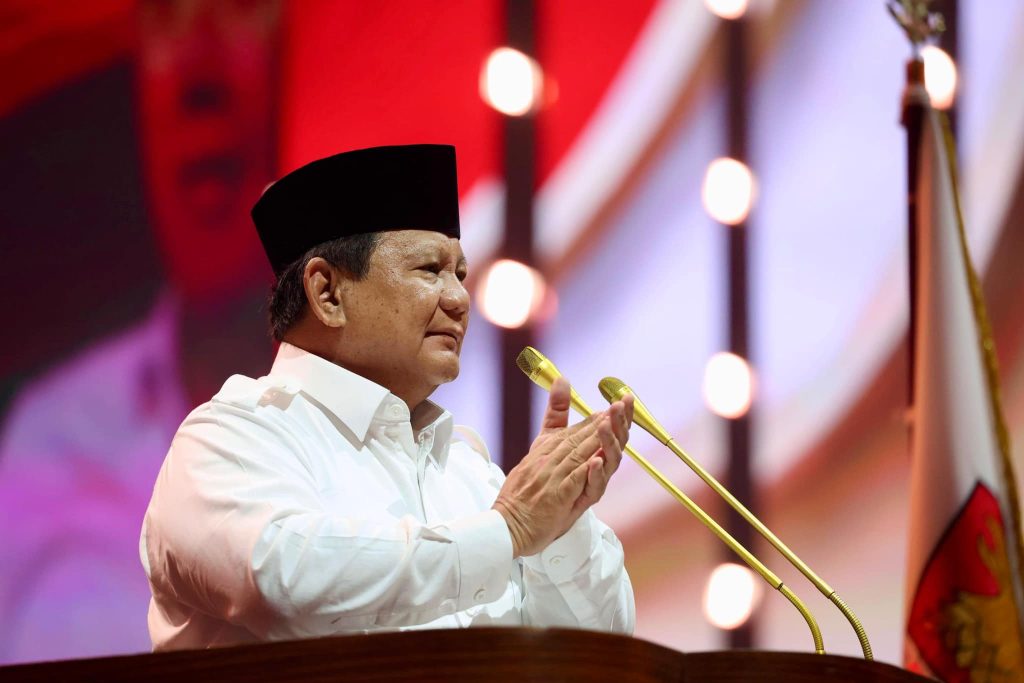
Indonesia’s Market Volatility: Policy Uncertainty Tests Investor Confidence
he BGA Indonesia Team wrote an update to clients on how policy uncertainty has led to market volatility in Indonesia.
Context
Indonesian stocks plunged 7 percent at one point on March 18 before closing 3.8 percent lower — the sharpest fall in three years. The Indonesian Stock Exchange (IDX) suspended trading for 30 minutes, its first such halt since the pandemic in March 2020. This decline continues a broader trend, with the index down 11 percent year-to-date and 20 percent over the past six months.
The selloff, which contrasted with gains in regional and global markets that day, underscores growing financial sector and investor unease over policy uncertainty under President Prabowo Subianto’s administration — concerns that had already unsettled Indonesian conglomerates and multinational companies alike. While the IDX Composite is on the rebound, this is a moment to dissect the policymaking dynamics fueling market turmoil and assess how Prabowo’s leadership style is driving investor uncertainty.
Significance
In January, the government abruptly announced an 8.5 percent spending cut, affecting nearly all ministries and agencies. The move was poorly communicated, leading to weeks of uncertainty before it was revealed that the savings would be redirected to Danantara. Further unsettling markets, the president also canceled a planned VAT hike from 11 percent to 12 percent at the last minute, disrupting key fiscal projections.
An Organization for Economic Cooperation and Development (OECD) report released on March 17 downgraded Indonesia’s growth forecast from 5.2 percent to 4.9 percent, reinforcing concerns that the country faces stagnation — in stark contrast to the government’s 8 percent growth ambitions and the rapid GDP expansion in neighboring Vietnam and the Philippines. The downgrade aligns with broader economic warning signs, including mass layoffs in the manufacturing sector, reports of a shrinking middle class, and the first instance of deflation in more than two decades — signaling softening demand.
Implications
President Prabowo campaigned on mainstream pro-poor policies (free meals, affordable housing) and, just five months into his term, holds an astonishing 80 percent approval rating for advancing these initiatives. However, he has also shown a pattern of making spontaneous, broad-based concessions, including popular but costly initiatives such as canceling the 2025 value-added tax (VAT) hike, expanding electricity subsidies, and granting debt forgiveness for small businesses.
Despite President Prabowo’s stated ambition to attract high-quality foreign direct investment, recent policy shifts have fueled concern among global firms and market analysts. The administration’s policymaking is shaped by three key characteristics — a “man-of-the-people” approach, extreme political inclusivity, and a hard line on select priorities. This combination has defined Prabowo’s first five months: exceptional political stability and high approval ratings, but also rising uncertainty — even frustration — among investors.
source : https://bowergroupasia.com/indonesias-market-volatility-policy-uncertainty-tests-investor-confidence/

Indonesia’s Coretax System Enters More Stable Phase Amid Mixed Reactions
Overview
Indonesia’s Coretax System has entered a more stable phase, according to Deputy Finance Minister Anggito Abimanyu. After months of technical issues and public criticism, the system that supports Indonesia’s tax administration now operates with significantly fewer disruptions. Anggito defended the system in a recent statement, calling it a major innovation and rejecting claims that it caused a sharp drop in tax revenue.
“Alhamdulillah March has brought no more significant complaints,” said Anggito during a virtual presentation at the Business Association Feedback and Socialization event on April 7, 2025.
Early Implementation Faced Technical Hurdles
When Indonesia’s Coretax System launched in January 2025, it encountered various issues that slowed down the country’s tax operations. One major problem involved uploading tax invoices. Taxpayers and businesses reported delays and errors when attempting to input data into the new platform.
At its worst, the latency for issuing a tax invoice reached up to 10 seconds. Additionally, login issues and problems with filing tax returns further complicated the transition to the new system. Officials acknowledged these concerns and began addressing them through a series of updates and fixes.
Coretax System Shows Performance Gains
Despite a rocky start, Indonesia’s Coretax System has improved significantly. The Directorate General of Taxes reported that between January and March 16, 2025, the system processed over 136.9 million tax invoices. According to Director of Counseling, Services, and Public Relations Dwi Astuti, the latency for issuing invoices has dropped to just 1.46 seconds.
“The tax invoices consist of 61,239,243 invoices for January, 64,035,902 for February, and 11,694,131 for March,” Dwi stated in an official release dated March 19, 2025.
Other improvements include faster login times and quicker generation of withholding tax receipts and annual tax return submissions. By early March, login latency had dropped from 4.1 seconds in February to just 0.012 seconds.
Tax Revenue Drop Sparks Concern
Despite recent improvements, Indonesia’s tax revenue saw a significant decline early in 2025. The Finance Ministry reported a total tax revenue of IDR 187.8 trillion (approximately USD 11.88 billion) as of February, marking a 30.2% decrease year-on-year. In February 2024, tax revenue had reached IDR 269.02 trillion (around USD 17.01 billion).
Experts believe the initial issues with Coretax contributed heavily to the drop. Since all tax payment processes must now go through Coretax, system instability delayed tax compliance across key categories. These include income tax (PPh), value-added tax (VAT), and land and building tax (PBB) for the mining sector.
“That’s why, practically speaking, tax payments could not be made in January 2025 when Coretax was still problematic,” said Prianto Budi Saptono, Chairman of the Supervisory Board at the Indonesian Tax Consultants Association.
Mixed Views on Coretax
While the Finance Ministry and some officials remain optimistic, analysts are more cautious. Fajry Akbar, Research Manager at the Center for Indonesia Taxation Analysis (CITA), pointed out that Coretax’s early flaws, the application of an average effective rate (TER), and increased VAT refunds all played a role in the revenue contraction.
“This improvement is happening because I see the main impact as operational risk, as well as the TER correction and VAT refunds, which will gradually decrease in the coming months,” said Fajry on March 13, 2025 as reported by Bisnis.com.
Still, he emphasized that economic conditions will ultimately determine whether the government can meet its 2025 tax revenue target of IDR 2,189.3 trillion (roughly USD 138.47 billion). “If macro conditions remain in line with the state budget assumptions—such as 5.2% economic growth—and the system stays in competent hands, I still believe in the health of our public finances,” he added.
Digital Tax Reform Remains a Priority
Indonesia’s Coretax System is part of a broader digital tax reform strategy aimed at increasing transparency and efficiency. Officials believe that once fully optimized, Coretax will level the playing field between taxpayers and tax authorities.
“The appeal and audit process will become more credible, and inspections more predictable,” said Anggito. He remains confident that the system will play a key role in strengthening Indonesia’s tax infrastructure moving forward.
As Coretax stabilizes, both the government and taxpayers hope it will deliver on its promise of modern, reliable, and fair tax administration.
source : https://sevenstonesindonesia.com/blog/indonesias-coretax-system-no-longer-facing-issues-deputy-says/
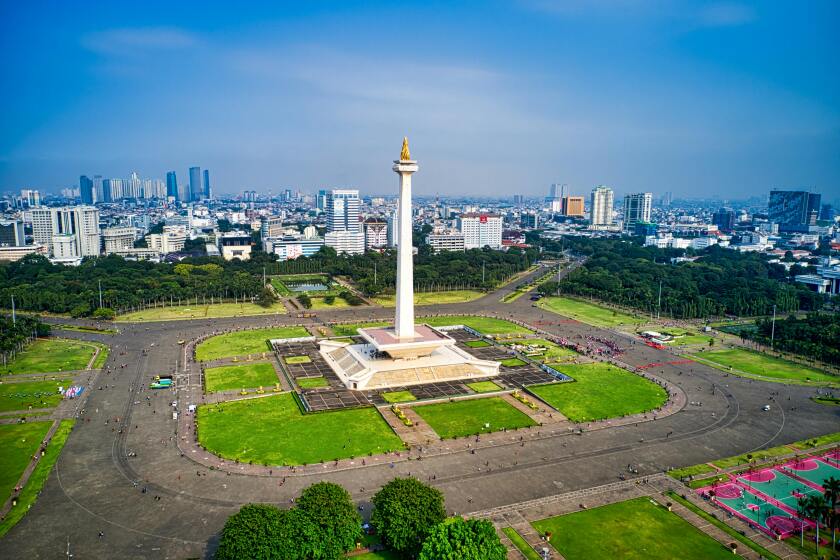
Indonesia Adopts Global Minimum Tax: What Businesses Need to Know
Overview
Businesses must embrace a new tax paradigm with Indonesia’s adoption of Pillar Two. Ichwan Sukardi and T. Qivi Hady Daholi of RSM Indonesia explore the impact on compliance, transfer pricing, and tax incentives.
The implementation of the global minimum tax (GMT) represents a fundamental shift in the international tax system. The GMT framework ensures that large multinational enterprises (MNEs) have at least a 15% effective tax rate (ETR) in all jurisdictions where they operate. When the ETR in any jurisdiction is less than 15%, a top-up tax is levied, either in the host country or in the jurisdiction of the ultimate parent entity (UPE).
As a member of the G20 and Inclusive Framework, Indonesia has supported this change. As a result, it adopted Pillar Two by issuing Ministry of Finance Regulation No. 136 of 2024 (PMK-136), which establishes the requirements for its application in Indonesia.
PMK-136 took effect on January 1, 2025, and follows the common approach by using the same framework provided by the OECD.
Key Areas of Impact
This regulation will significantly influence Indonesia’s tax environment in six key areas:
The concept of the GMT and its application through PMK-136;
The transitional safe harbour rules and compliance requirements for MNEs;
The initial identification of the GMT’s magnitude in Indonesia;
The classification issue with regard to the Daya Anagata Nusantara Investment Management Agency (Danantara), Indonesia’s newly established sovereign wealth fund;
The importance of transfer pricing in a GMT world; and
The future of tax holidays under the GMT rule in Indonesia.
This is more than just a regulatory update for businesses — it is a strategic point that must be addressed immediately and with a focus on the future.
Overview of the Regulations
PMK-136 outlines the entities covered, the methods of calculation, and the requirements for compliance. The GMT applies to MNEs with an annual consolidated turnover of €750 million or more, but excludes:
Government institutions
International organisations
Non-profit organisations
Pension funds
Investment funds
Real estate funds
The identification of a top-up tax begins with calculating the ETR for each MNE. This is the ratio of the adjusted covered taxes to the global anti-base erosion (GloBE) income in each jurisdiction. If the ETR is less than 15%, a top-up tax is due — except for the substance-based income exclusion, which removes income derived from tangible assets and payroll expenses.
The top-up tax rate applies to a jurisdiction’s GloBE income to ensure that low-taxed profits are subject to additional taxation.
Charging Mechanism: Three-Tiered Approach
To maintain the GMT framework’s effectiveness, Indonesia employs a three-tiered charging mechanism:
Qualified Domestic Minimum Top-Up Tax (QDMTT) – allows low-tax jurisdictions to impose additional taxes locally.
Income Inclusion Rule (IIR) – permits the UPE to collect the tax if QDMTT is not applied.
Undertaxed Payment Rule (UTPR) – allows other jurisdictions to levy the tax based on economic activity if neither QDMTT nor IIR apply.
What Companies Should Prepare For
As the regulation takes effect in fiscal year 2025, companies operating in Indonesia should be prepared for new reporting and compliance requirements, including:
Annual corporate income tax return
GloBE Information Return (GIR)
Businesses must take a proactive approach to ensure they remain compliant and optimize their global tax position under the new regime.
source : https://www.internationaltaxreview.com/article/2emhgeeizf3h48nf4ag3k/sponsored/the-need-for-indonesias-industries-to-adapt-to-the-global-minimum-tax

Indonesia’s fight against climate change: Carbon taxes and beyond
Indonesia’s Climate Fiscal Strategy: Green Goals Through Taxation and Policy
Overview
Ichwan Sukardi and Sophia She of RSM Indonesia explain the fiscal steps that Indonesia — one of the largest greenhouse gas emitters in Asia — is taking to become a greener country.
Climate change has steadily increased in urgency and can now be considered one of the most critical issues facing humanity. Its far-reaching impacts will affect every facet of life, and the rate of environmental deterioration continues to rise exponentially.
Climate change refers to long-term alterations in weather patterns and climate systems, caused primarily by the concentration of greenhouse gases. These not only lead to global warming but also impact agricultural sustainability, sea level rise, and atmospheric health.
Global Emissions and the Role of Fiscal Policy
Since the industrial revolution, massive volumes of carbon dioxide (CO₂) and other greenhouse gases — including methane, nitrous oxide, and chlorofluorocarbons — have been released into the atmosphere. Their concentration is now higher than at any point in the past 800,000 years.
The central challenge for governments, international bodies, and societies is how to reduce greenhouse gas emissions. According to the 2022 Climate Change Performance Index (CCPI), Scandinavian countries lead the way, thanks to robust commitments to renewable energy and high carbon taxes.
While climate solutions include both fiscal measures and ethical frameworks, the latter often stirs political and social tension by focusing on guilt and blame. Fiscal policies, though sometimes criticized as short-term or as a revenue tactic, have shown tangible effects on behavior because they impact economic decisions directly.
Indonesia in the Regional Context
According to the International Monetary Fund’s 2021 report on Fiscal Policies to Address Climate Change in Asia and the Pacific, most regional countries have implemented carbon taxes or emissions trading systems as part of their Paris Agreement commitments. However, Indonesia, along with Thailand and Vietnam, had not yet implemented these measures at the time of the report.
Countries like Singapore and Japan have introduced carbon tax schemes, though the rates remain relatively low compared to those in Europe.
The Climate Crisis in Indonesia
Indonesia, with over 17,000 islands and the fourth-largest population in the world, is both a contributor to and victim of climate change. It ranks among the top ten largest global carbon emitters, with greenhouse gas emissions rising by more than 313% compared to 1990 levels.
Although natural disasters like earthquakes and floods are common in Indonesia, the government’s plan to move the national capital highlights the growing climate crisis. Projections indicate that much of North Jakarta could be submerged by 2050 due to rising sea levels.
Indonesia’s Commitment and Policy Response
Indonesia ratified the Paris Agreement in April 2016 through Law No. 16 of 2016. It pledged a 29% reduction in emissions by 2030, and up to 41% with international support, through its Nationally Determined Contribution (NDC).
Meeting these targets will be costly, given Indonesia’s high exposure to climate-related physical risks. However, failure to act will result in long-term harm for future generations. Public education will be critical to build support, as imposing fiscal measures without adequate awareness could lead to social and economic unrest.
source : https://www.internationaltaxreview.com/article/2a7cso9crjlt5cyadfv2n/indonesias-fight-against-climate-change-carbon-taxes-and-beyond